PianoPicked
Picked by the action, not the label.
Digital pianos for learning at home: for every model we write down the key action and sensors the maker actually declares, not just “88 weighted keys”, and we flag what’s missing.
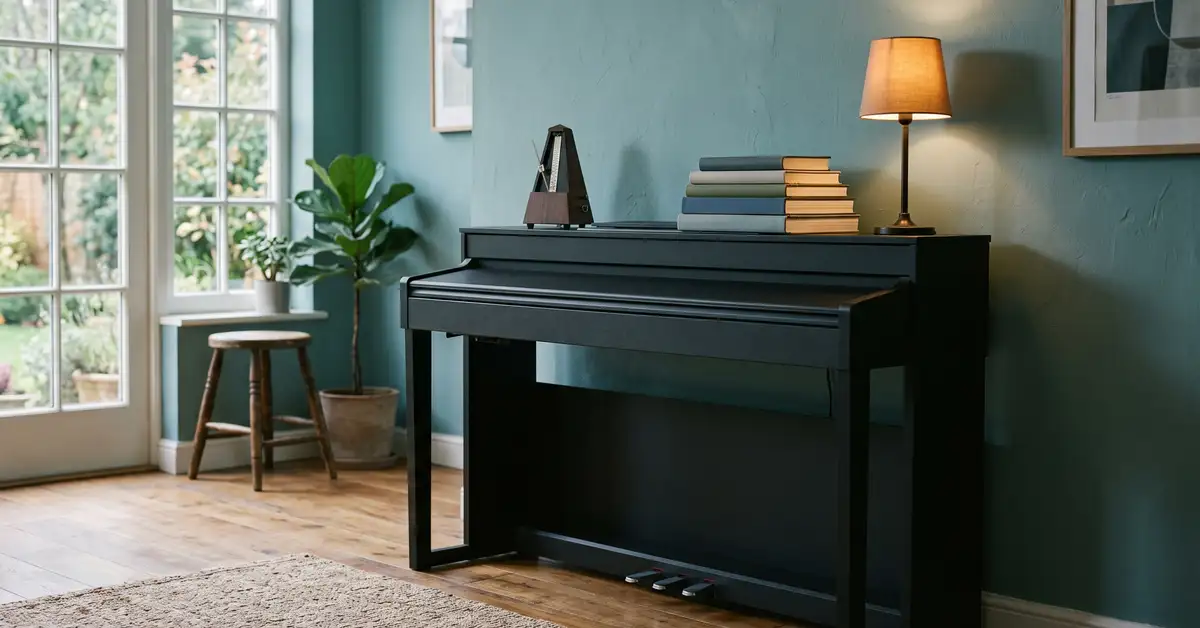
Where to start
- First piano for lessons
- Apartment & headphones
- Portable or small space
- Console for the living room
- Keyboard or digital piano?
“88 weighted keys” doesn’t tell you much.
The same words appear on very different mechanisms: semi-weighted, weighted, graded hammer action. We write down how the maker names and describes the action and how many sensors each key has, and we tell you when they don’t say.
| Example | Action, as declared | Sensors per key |
|---|---|---|
| Instrument A | “Weighted keys” | Not stated |
| Instrument B | Graded hammer action | 3 |
Every guide compares the specs that matter for how you’ll play (action, sensors, polyphony, pedals, headphones, footprint), not star ratings.
Guides
How we read a digital piano spec sheet
What each line on a maker’s spec sheet tells you, and how to spot the figures that aren’t published.
- Key action
- Sensors per key
- Polyphony
- Pedals
- Headphone outputs
- Footprint
How a pick gets made
The maker’s documents (spec sheet, manual and official model page)
Specs recorded exactly as the maker states them (action, sensors, polyphony, pedals, headphone outputs) and compared against your situation
Limits stated: anything we couldn’t verify is flagged clearly on the page
How we work
How we choose
The documents we read for each model, the specs we record and how we match them to your situation.
We don’t play the pianos we pick
We don’t buy, play or physically test the pianos: we read spec sheets, manuals and maker-declared data, and flag anything we couldn’t verify.
What we don’t do
We don’t give lessons or advice on teaching methods, and we don’t cover repairs or work on the instrument: that’s what the maker’s manual, authorized service and a good teacher are for.
PianoPicked earns from links to retailers, and that never changes what we recommend.
Questions
Do you test the pianos?
No. We don’t buy, play or physically test them. Every pick is worked out from the maker’s spec sheet, manual and official model page, and anything we couldn’t verify is flagged on the page.
Why do you show a price band instead of a price?
Prices change often and differ from one retailer to the next, so a single figure can be out of date by the time you read it. A band such as $400–700 tells you where a model sits without pretending to be exact.
What does “88 weighted keys” actually mean?
88 keys is the full range of an acoustic piano. “Weighted” is a label makers and sellers use for different mechanisms, from semi-weighted keys to graded hammer actions. So we record the action as the maker names and describes it, and the number of sensors per key when the maker declares it.
Who’s behind PianoPicked?
Every guide is published under the PianoPicked name and credits the person who edited it, with a short bio. We don’t publish anonymous content.